ECONOMÍA
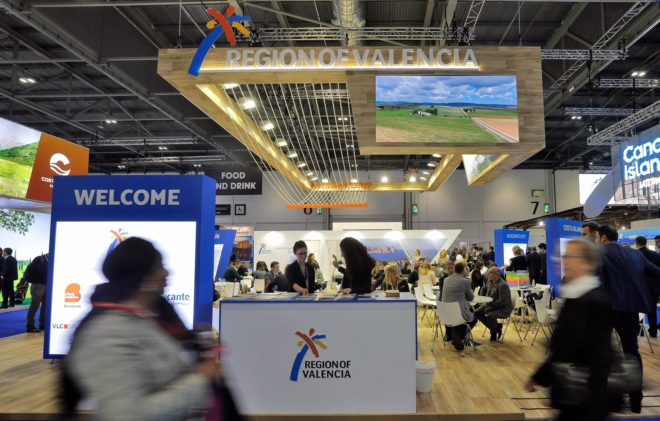
La feria de turismo de Londres alerta de que el 58% de los británicos no viajará a Europa si tiene que pagar visado
El mercado se verá afectado incluso en un escenario de consenso
En el Consell creen que es el momento de crecer en mercados como Alemania
La Comunidad Valenciana aguanta el tirón del ‘todo incluido’ de Turquía
Hasta 20 millones de británicos podrían dejar de viajar a países europeos el verano de 2019 en caso de que la salida de Reino Unido de la Unión se consume sin ningún tipo de acuerdo. Este es el resultado de la investigación llevada a cabo por la organización de la feria de turismo de Londres (la WTM por sus siglas en inglés, World Travel Market) que se ha celebrado entre los días 5 y 7 de noviembre, y donde España y la Comunidad Valenciana han tenido un papel destacado.
En concreto, la WTM alerta de que un escenario «sin acuerdo en el Brexit podría hacer que los ingleses dejasen de viajar a «destinos tradicionales como España, Grecia, Portugal o Italia, forzados a pagar 52 libras (unos 59 euros) por un visado Schengen», el que da un acceso de 90 días a los espacios europeos. En concreto, una encuesta realizada por la feria a 1.025 británicos «revela que el 58% de ellos considerarían ir a un destino alternativo en caso de tener que pagar» por esta documentación.
Esto colocaría a los británicos en una posición similar a Rusia y China, dos mercados importantes para Europa pero cuyo crecimiento, según el sector, se ha visto lastrado en los últimos años por culpa de los visados. «El problema de estos países», comenta la secretaria general de la patronal de Benidorm (Hosbec), Nuria Montes, «es que diplomáticamente es muy complicado eliminar los visados porque ellos sí se los exigen a España. Y hay que guardar una proporcionalidad». Por este motivo los empresarios hoteleros no contemplan un escenario en el que no se produzca un acuerdo con Reino Unido, principalmente porque, como señala la feria londinense, «sería una catástrofe». «Ni las más pesimistas agencias de viaje contemplan ese escenario», remata Montes.
Aún así, la WTM dice que, incluso si los británicos resultan exentos de tener que pagar el visado europeo, aún tendrían que abonar unas siete libras (ocho euros) por «permisos de entrada dentro de un plan específico de entrada en la Unión Europea que entraría en vigor en 2020». Es más: independientemente de si hay acuerdo o no, «cuatro de cada diez ciudadanos de Gran Bretaña creen que el Brexit tendrá un impacto en sus previsiones de vacaciones de 2019, con un tercio preocupado por pasar sus vacaciones en Europa por la salida del país de la Unión». En 2017 un total de 46,5 millones de británicos hicieron viajes fuera de su país. Se estima que el 75% (34,8 millones) fueron a países europeos, según datos de la WTM.
El Brexit y sus efectos estuvieron muy presentes en la edición de este año de la WTM. El presidente de la Generalitat, el socialista Ximo Puig, centró sus declaraciones en este tema, al asegurar que ya estaba afectando a las exportaciones valencianas; incluso cifró en un 20% la caída de ventas de la industria del automóvil al país anglosajón en 2017. Respecto al turismo, Puig aseguró que la salida de Reino Unido de la UE afectaría directamente «al poder adquisitivo de los británicos» y que eso probablemente repercutiría en los viajes.
La buena noticia es que, de momento, eso no se está notando en el ritmo de reservas a corto plazo, al menos de cara a la próxima temporada. Según las previsiones de la consultora GFK, para verano del año que viene se mantienen, con un leve crecimiento de dos y tres puntos en Costa Blanca y Benidorm, respectivamente. La tendencia, sin embargo, es pelear por la rentabilidad con los destinos internacionales que se han disparado por su relación calidad-precio, la devaluación de su moneda respecto a la libra y la novedad que supone estar en los catálogos de los operadores británicos tras años cerrados por la inestabilidad política. Turquía y Egipto, los principales beneficiados por la nueva coyuntura internacional, ya registran un crecimiento en el número de reservas del 79 y 94%, respectivamente.
¿Cómo pretende competir la Comunidad con esto? Pues los valores añadidos, principalmente la seguridad y la oferta multiproducto. Además, los técnicos de Turismo indican que «es el momento» de apostar por el crecimiento en otros países, como por ejemplo Alemania. Este mercado, el más importante de Europa por número de emisores, en España, principalmente en Islas Baleares. Sin embargo, en el Consell creen que existe «un amplio margen para crecer en los próximos años», sobre todo «potenciando el turismo activo (uno de los principales reclamos para los alemanes)».
Otro factor a tener en cuenta es el tema de las tarifas. Hosbec asegura que, en el caso de la Comunidad, el sector ha aprovechado la coyuntura internacional para aumentarlos, y que en 2019 no habrá una bajada significativa. No parece que ocurra lo mismo con otras regiones, donde los operadores han planteado «descensos del 5%» para mantener al destino competitivo. En caso de que los precios sigan bajando podría producirse una guerra de precios en España para mantener cifras de volumen

Learn More Kingdom United: a ‘Brexit’ without agreement would leave 20 million tourists in the air
ECONOMY
AlicanTE
SERGIO SAMPEDRO
Nov 11 2018 09:09
Exhibitor of the Valencian Community at the tourism fair in London, the first one to have the region outside of Turespaña. EFE / MANUEL BRUQUE
The London tourism fair warns that 58% of Britons will not travel to Europe if they have to pay a visa
The market will be affected even in a consensus scenario
In the Consell they believe that it is time to grow in markets such as Germany
The Valencian Community holds the pull of Turkey’s ‘all-inclusive’
Up to 20 million Britons could stop traveling to European countries the summer of 2019 in case the United Kingdom’s departure from the Union is consumed without any agreement. This is the result of the research carried out by the organization of the London Tourism Fair (the WTM for its acronym in English, World Travel Market) that was held between November 5 and 7, and where Spain and the Valencian Community have had a prominent role.
Specifically, the WTM warns that a scenario «without agreement in the Brexit could make the English stop traveling to» traditional destinations such as Spain, Greece, Portugal or Italy, forced to pay 52 pounds (about 59 euros) for a visa Schengen », which gives 90-day access to European spaces. In particular, a survey conducted by the British 1,025 show «reveals that 58% of them would consider going to an alternative destination in case of having to pay» for this documentation.
This would place the British in a position similar to Russia and China, two important markets for Europe but whose growth, according to the sector, has been hindered in recent years by the visas. «The problem of these countries,» says the general secretary of the employers of Benidorm (Hosbec), Nuria Montes, «is that diplomatically it is very complicated to eliminate visas because they do demand them from Spain. And you have to keep a proportionality ». For this reason the hotel businessmen do not contemplate a scenario in which an agreement with the United Kingdom does not take place, mainly because, as the London fair points out, «it would be a catastrophe». «Not even the most pessimistic travel agencies contemplate that scenario», ends Montes.
Still, the WTM says that, even if the British are exempt from having to pay the European visa, they would still have to pay about seven pounds (eight euros) for «entry permits within a specific plan of entry into the European Union that it would come into force in 2020 ». Moreover: regardless of whether there is agreement or not, «four out of ten citizens of Great Britain believe that the Brexit will have an impact on their holiday forecasts for 2019, with a third worried about spending their holidays in Europe by leaving the country of the Union». In 2017 a total of 46.5 million Britons made trips outside their country. It is estimated that 75% (34.8 million) went to European countries, according to data from the WTM.
United Kingdom flags placed in a location on the beachfront of Benidorm. CONCHA FERNÁNDEZ
The Brexit and its effects were very present in this year’s edition of the WTM. The president of the Generalitat, the socialist Ximo Puig, focused his statements on this issue, to ensure that it was already affecting Valencian exports; even 20% of the fall of sales of the automotive industry to the English-speaking country in 2017. Regarding tourism, Puig said that the UK exit from the EU would directly affect «the purchasing power of the British» and that probably It would affect travel.
The good news is that, at the moment, that is not being noticed in the pace of short-term bookings, at least for the next season. According to the forecasts of the consultant GFK, for summer next year they remain, with a slight growth of two and three points in Costa Blanca and Benidorm, respectively. The trend, however, is to fight for profitability with international destinations that have exploded for their value for money, the devaluation of their currency against the pound and the novelty of being in the catalogs of British operators after years closed by political instability. Turkey and Egypt, the main beneficiaries of the new international conjuncture, already recorded a growth in the number of reserves of 79 and 94%, respectively.
How does the Community intend to compete with this? Well, the added values, mainly the security and the multi-product offer. In addition, tourism technicians indicate that «it is time» to bet on growth in other countries, such as Germany. This market, the most important in Europe by number of issuers, in Spain
 Punta Canfali
Debe estar conectado para enviar un comentario.